
Care tag
- Over-wetting is the main DIY risk; EPA says wet materials should be dried within 24 to 48 hours.
- Never mix bleach with ammonia or other cleaners, UT Extension and EPA warn.
- For valuable or sentimental items, EPA suggests consulting a specialist.
Key takeaways
- Everyday spills and high-traffic lanes in synthetic carpet are reasonable DIY jobs.
- Wool, hand-knotted and antique rugs belong with a specialist.
- Anything soaked by a flood or sewage is a removal decision, not a cleaning job.
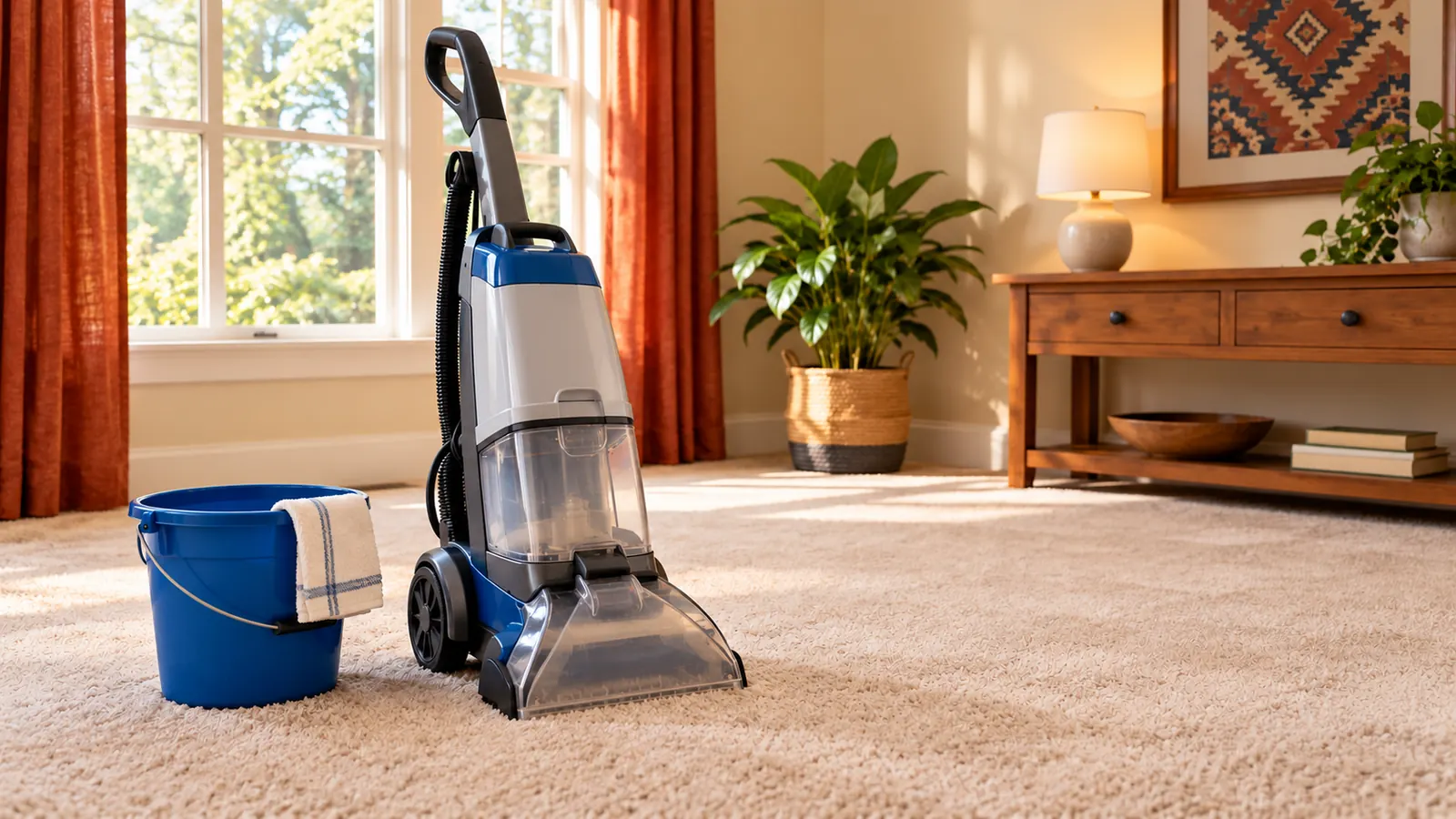
Renting a carpet cleaning machine is cheaper than hiring a company, and for some jobs it works well. For others, the savings disappear the first time a rug shrinks, bleeds color or starts to smell musty. The right choice depends on the fiber, the value of the rug and how wet the job will get.
The biggest DIY risk: too much water
Any wet cleaning method puts water into the carpet, and with a rented machine it is up to you to pull it back out. The U.S. Environmental Protection Agency’s mold guide says that if wet or damp materials are dried within 24 to 48 hours, in most cases mold will not grow, and recommends keeping indoor humidity below 60 percent, ideally between 30 and 50 percent. Before you start, plan how the room will dry: windows, fans and air conditioning, and furniture kept off the carpet until it is dry.
Chemical safety
University of Tennessee Extension’s guide to cleaning supplies gives a rule worth remembering: never mix bleach with ammonia or any other toilet bowl cleaner. EPA’s flood cleanup fact sheet repeats it, warning that the combination can create toxic vapors, and adds a broader rule: do not mix cleaning products together, and read and follow the label.
EPA also advises increasing ventilation when using products that emit volatile organic compounds and following label instructions carefully, for example using a product outdoors or with an exhaust fan if the label calls for a well-ventilated area. Its Safer Choice label marks products whose ingredients it has reviewed for health and environmental safety; see Carpet Stain Removal: A Careful Method and Safer Products. If you use a disinfectant, EPA notes that surfaces must be cleaned first for it to work.
Room by room
| Situation | Reasonable choice | Why |
|---|---|---|
| Fresh spill on synthetic carpet | Do it yourself, right away | Fast blotting does most of the work |
| Traffic lanes in wall-to-wall carpet | DIY with care, or a professional | Watch the water and drying time |
| Pet urine that has soaked in | Professional who treats the pad | Odor sits in the padding |
| Wool, hand-knotted or antique rug | Rug specialist | Fibers and dyes need specific handling |
| Carpet soaked by a flood | Removal decision | EPA says to discard materials that soak up a lot of water |
When a specialist is worth it
EPA’s mold guide makes a practical point that applies to cleaning in general: if you are unsure how to clean an item, or if it is expensive or of sentimental value, you may wish to consult a specialist, and it lists carpet and rug cleaning among the specialties. The National Park Service’s rules for historic rugs show why: no beater-bar vacuums, controlled suction, vacuuming in the direction of the pile and careful attention to fringes. More in Caring for Wool and Oriental Rugs: Vacuuming, Moths, Pads and Storage.
Tip: Test any cleaner in a hidden corner first, such as under a sofa, and wait for it to dry before judging the color. A color change in the corner is much easier to live with than one in the middle of the room.
When it is no longer a cleaning job
After a flood, the question changes. EPA’s flood cleanup fact sheet says you should throw away materials that soak up a lot of water, such as drywall, carpets and ceiling tiles, and that most of the time anything that got wet and cannot be thoroughly cleaned and dried within 24 to 48 hours should be discarded. Floodwater can mix with sewage and bring bacteria and chemicals into the home. See Carpet After a Flood in Nashville: What to Save, What to Throw Away and How to Stay Safe.
Protect yourself after a flood
If you do clean up after water damage yourself, EPA advises wearing, at a minimum, an N-95 respirator mask, goggles and protective gloves to protect against mold and other contaminants, and removing standing water with a wet vacuum as soon as possible.
Counting the real cost
A DIY job costs the machine rental, solution and a day of your time, plus the risk of a mistake. A professional costs more but takes on the drying and, if insured, some of the risk. If you hire, use the checks in How to Choose a Rug or Carpet Cleaner in Nashville: Checks That Take Ten Minutes and the phone questions in Questions to Ask a Carpet Cleaner Before You Book, and the Answers to Listen For.
A middle path
Many households combine both: regular vacuuming and quick spot cleaning at home, a professional for wall-to-wall carpet now and then, and a specialist for the one rug that matters most. That split puts your effort where it works and your money where the risk is.