
Care tag
- Americans generated about 3.4 million tons of carpets and rugs as waste in 2018, EPA estimates.
- About 9.2 percent was recycled and about 73 percent landfilled that year.
- Ask your installer whether removal and recycling of old carpet are included in the quote.
Replacing carpet leaves you with a surprisingly large pile of old carpet and padding, and an old rug that no longer fits can be just as awkward. Here is what happens to carpet waste nationally, and how to make better choices for your own.
How much carpet is thrown away
The U.S. Environmental Protection Agency estimates that carpets and rugs made up 3.4 million tons of municipal solid waste in 2018, 1.2 percent of all waste generated. Based on industry data, EPA estimates that 310,000 tons of carpet fiber, backing and padding were recycled that year, 9.2 percent of the total. About 17.8 percent was burned for energy recovery, and the majority, 73 percent, was landfilled.
| What happened to carpets and rugs in 2018 | Share | EPA estimate |
|---|---|---|
| Recycled (fiber, backing and padding) | 9.2 percent | 310,000 tons |
| Burned with energy recovery | 17.8 percent | |
| Landfilled | 73 percent |
Another EPA page puts it in household terms: over four billion pounds of carpet enter the U.S. solid waste stream every year, more than one percent by weight and about two percent by volume of all municipal waste.
Why carpet is hard to recycle
EPA explains that carpet’s bulk creates collection and handling problems for solid waste operations, and that the variety of materials in carpet, face fiber, backing and cushion, makes it difficult to recycle. Recovered nylon suitable for new carpet face fiber has been relatively limited because of technical and economic hurdles, while backing and cushion can come from both post-industrial and post-consumer sources.
Reuse first
The most effective way to keep carpet out of a landfill is to use it longer. EPA notes that more durable products generally reduce environmental impact because they need replacing less often, and that modular carpet tiles let worn or soiled sections be replaced individually instead of replacing a whole floor. A clean area rug in good condition can go to a family member, a charity or a community group rather than the curb.
Tip: Before replacing carpet because of stains or odor, try a thorough cleaning or replacing only the pad in the affected area. Ohio State’s veterinary hospital, for example, recommends replacing padding when pet urine odor persists rather than the whole carpet.
Be wary of vague green claims
EPA’s guide to greener carpet suggests weighing several attributes rather than any single label: the materials used to make and install the carpet, its durability and what happens to it at the end of its life. It points buyers to the Federal Trade Commission’s Guides for the Use of Environmental Marketing Claims when judging recycled-content and recyclability claims. EPA also notes that at least one manufacturer offers refurbished products made from used carpet that look and perform like new, a reuse option with 100 percent postconsumer content.
Choosing durability
A highly durable carpet is not always the best choice, EPA adds: for a temporary space or one likely to be renovated soon, a lighter product may make more sense. For a home you plan to stay in, durability, good installation and regular care are what keep carpet out of the waste stream longest. EPA notes that industry installation standards for residential carpet are published by the Carpet and Rug Institute.
Ask your installer
If you are buying new carpet, ask whether removal and disposal of the old carpet and pad are included, where it will go, and whether any of it will be recycled. EPA’s guide to greener carpet also suggests asking about the recycled content of the new carpet’s face fiber, backing and cushion, and choosing low-emitting adhesives. Get the answers in writing, as Tennessee officials recommend for any home improvement contract.
Doing it yourself
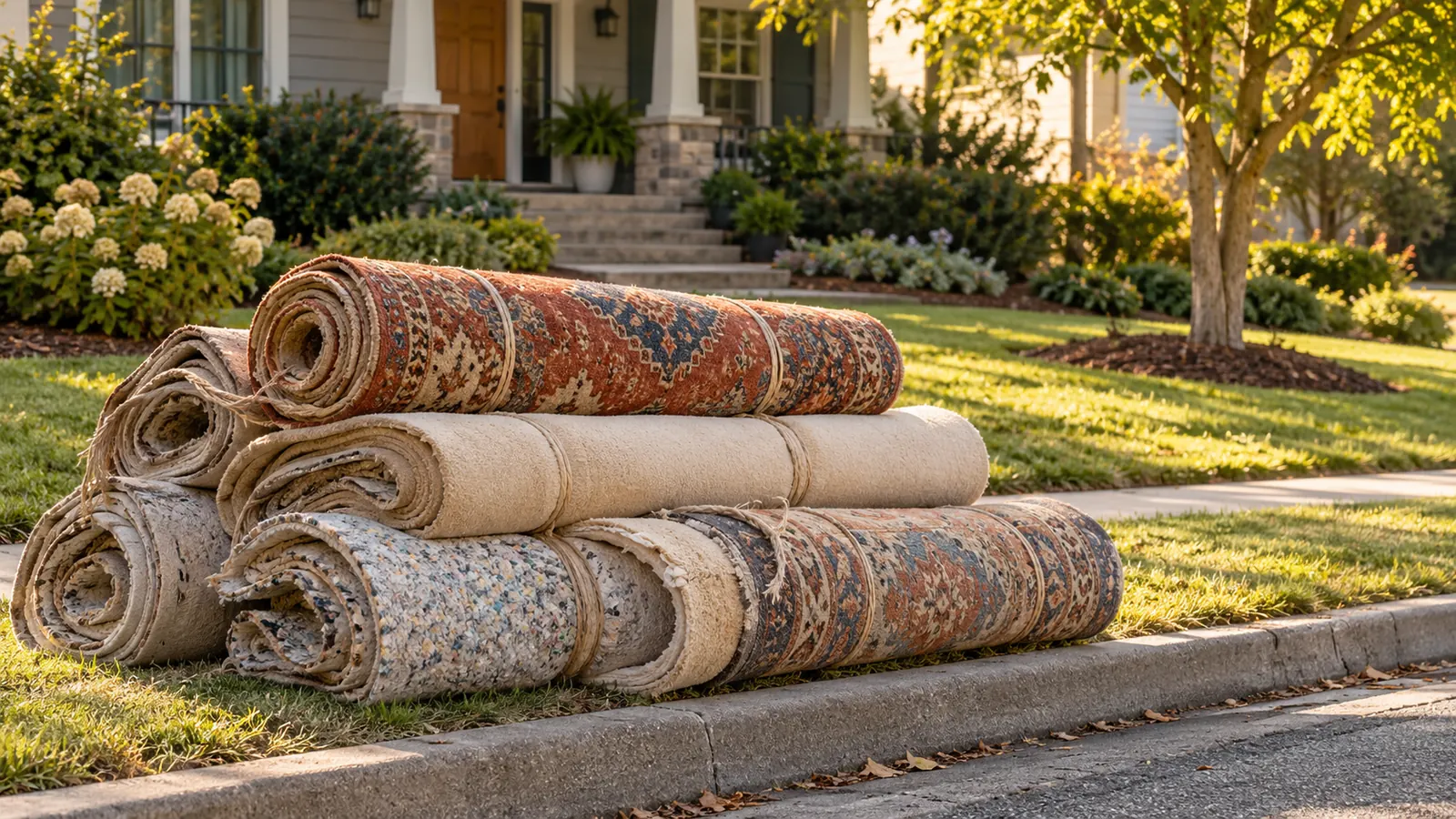
If you remove carpet yourself, cut it into strips and roll and tie them so they are manageable to carry, and bundle the padding separately. Check Metro Nashville’s waste and recycling services for current rules on bulky items before you put anything at the curb, because rules and schedules change.
Flood-damaged carpet
Carpet soaked in a flood is a different matter. EPA’s flood cleanup guidance says to throw away materials that soak up a lot of water, such as carpets, and anything that cannot be thoroughly cleaned and dried within 24 to 48 hours. Wear at least an N-95 respirator, goggles and gloves while handling it, and photograph it for insurance first; see Carpet After a Flood in Nashville: What to Save, What to Throw Away and How to Stay Safe.
Choosing what comes next
Whatever replaces the old carpet, a care routine will make it last; see How Often to Vacuum and Clean Carpets and Rugs: A Routine That Protects Them. In allergic households, consider washable area rugs on hard floors, as discussed in Carpet and Allergies: Dust Mites, Pet Dander, Mold and How Cleaning Helps.