
Care tag
- The National Park Service never uses beater-bar vacuums on historic rugs and vacuums in the direction of the pile.
- Clothes moth larvae feed on wool and do most damage to carpets left undisturbed, such as under heavy furniture.
- Large rugs are rolled for storage, around a tube at least 6 inches longer than the rug’s width.
A wool or hand-knotted rug can last for generations, but it fails in different ways from synthetic carpet. Its fibers are food for moths, its dyes can bleed, and its fringes wear first. Two public sources give unusually practical advice: the National Park Service, which cares for historic carpets in house museums across the country, and University of Tennessee Extension, which publishes guidance on the clothes moths found in Tennessee homes.
Vacuum gently
The Park Service’s rules for rugs used on floors are a good model for any valuable rug:
- Do not use vacuums with beater attachments on historic rugs.
- Control the suction; a plain floor attachment is usually enough for rugs that are not walked on much.
- Vacuum in the direction of the pile.
- Vacuum the back of the rug, the padding and the floor underneath at least once a year.
- Put small cups or discs under furniture legs and casters resting on the rug.
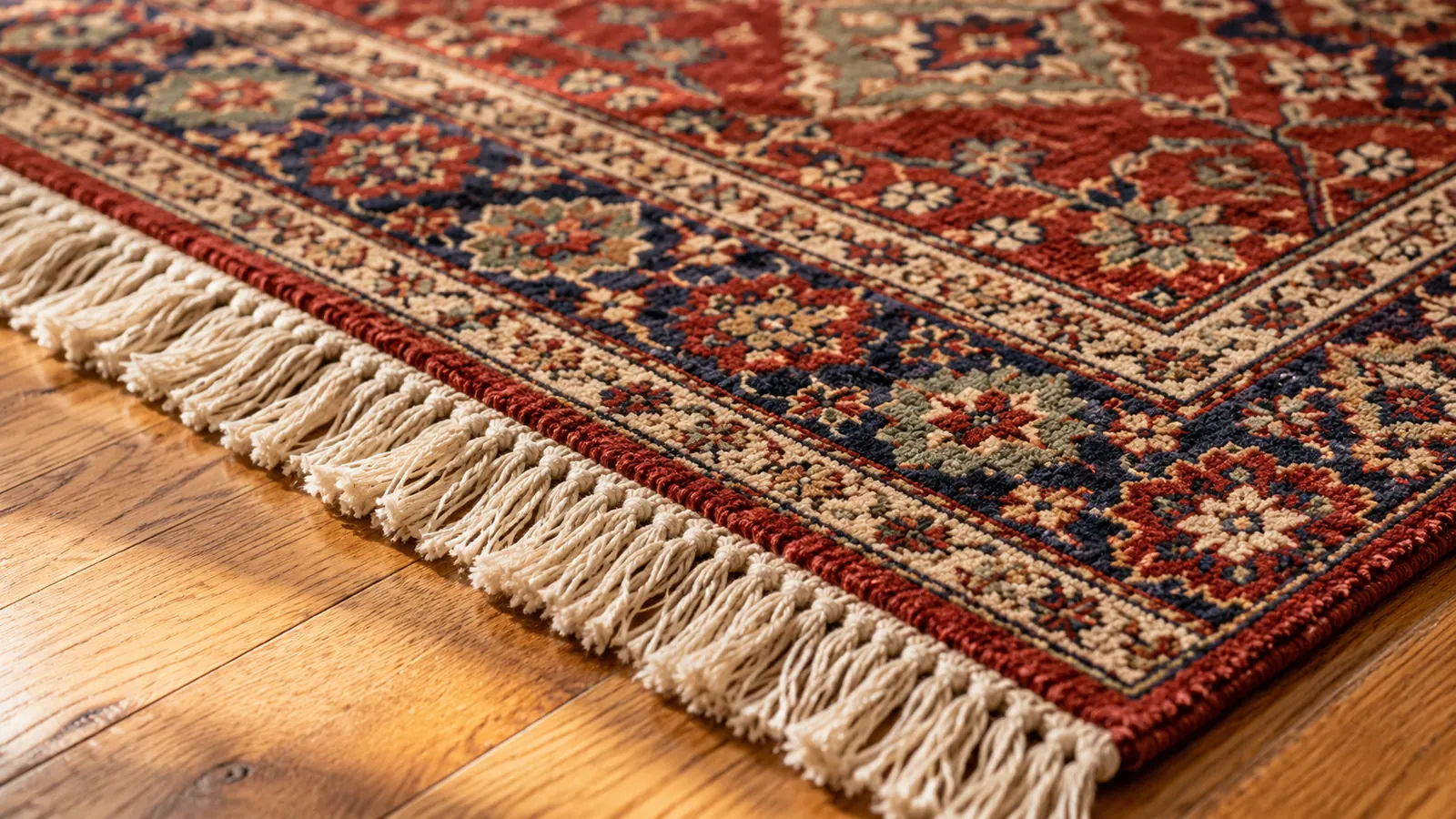
The Park Service also notes that fringes on rugs and carpets are especially vulnerable in historic houses. Avoid running a vacuum over fringes, which can catch and tear them.
Choose the right pad
Appropriate rug pads should be used, the Park Service says. It describes synthetic polyester padding with a non-skid surface placed against the floor to keep the rug from slipping, and tells staff to avoid rubber non-skid pads, jute and horsehair under historic rugs. Where traffic must cross a valuable rug, it uses a runner to mark the walkway.
Moths: the main enemy of wool
University of Tennessee Extension explains that clothes moth larvae feed on wool, feathers, fur, hair, leather, lint and dust, and occasionally on cotton, silk and synthetics. They are especially damaging to fabric stained with beverages, urine and oils from hair and sweat. Most damage is done to articles left undisturbed for a long time, such as carpets under heavy furniture. Three clothes moths are found in Tennessee: the webbing clothes moth, the casemaking clothes moth and the carpet or tapestry moth.
Signs to look for
Adult moths prefer darkness and rarely fly to lights; those fluttering around the house are probably males. Webbing clothes moth larvae spin silk tunnels and mats; casemaking larvae carry a small silk case and eat clean-cut holes. UT suggests using a flashlight to check under furniture that is seldom moved, in carpet corners and along edges, and notes that pheromone traps hung near oriental rugs can reveal an infestation you had not noticed. The Park Service likewise monitors traps for carpet beetle and moth evidence and acts quickly.
Prevention
UT says good housekeeping is critical: regular use of a strong vacuum with proper attachments to remove lint, hair and dust from floor cracks, baseboards and carpets, and regular cleaning of rugs where they meet the baseboards. It adds that frequent use of woolen articles almost assures no moth damage, which is one reason a rug in daily use often fares better than one rolled away in a closet.
Move heavy furniture on a wool rug a few inches every season. The undisturbed area beneath is exactly where UT says moth damage is worst.
If you find moths
Find and clean or remove the source first. UT Extension notes that freezing is an alternative to chemicals for smaller items: placed loosely in a polyethylene bag with the air removed, infested articles can be frozen at minus 4 degrees Fahrenheit for 48 hours, then thawed in a refrigerator before the bag is opened. Insecticides can discolor carpets, UT warns, so spot test in an inconspicuous place and follow the label. Heavy or hard-to-reach infestations are best handled by a professional pest control operator.
Storing a rug
The Park Service rolls large flat textiles such as rugs for storage because they are too large to handle safely flat. It uses a large-diameter tube for carpets, at least 6 inches longer than the textile’s width, works on a clean padded surface and smooths wrinkles as it rolls. Most textiles are rolled face in so the design faces up when unrolled; those with raised surfaces are rolled face out. UT adds that items should be cleaned before storage, because egg-laying moths are attracted to soiled articles.
Cleaning: when to call a specialist
Wool and hand-knotted rugs are a case where EPA’s general advice applies: for items that are expensive or of sentimental value, consider a specialist in carpet and rug cleaning. Ask how the company handles wool and fringes, as suggested in Questions to Ask a Carpet Cleaner Before You Book, and the Answers to Listen For. For spills in the meantime, blot gently as described in Carpet Stain Removal: A Careful Method and Safer Products, and deal with pet accidents fully, because UT notes moths favor fabric stained with urine; see Pet Stains and Odors on Carpet: A Vet-School Method That Stops Repeat Accidents.