
Care tag
- Ohio State’s vet hospital says never to use ammonia-based products on carpet where a cat has urinated.
- If odor persists, replace the padding and clean the floor underneath.
- Pet proteins in skin flakes, urine and saliva can trigger asthma in allergic people, EPA says.
Pet accidents are among the hardest carpet problems because the visible stain is only half of it. Urine soaks through the fibers into the backing and pad, and if the smell remains, many animals will return to the same spot. The Indoor Pet Initiative at Ohio State University’s veterinary hospital publishes a detailed method for cats that works for most urine accidents.
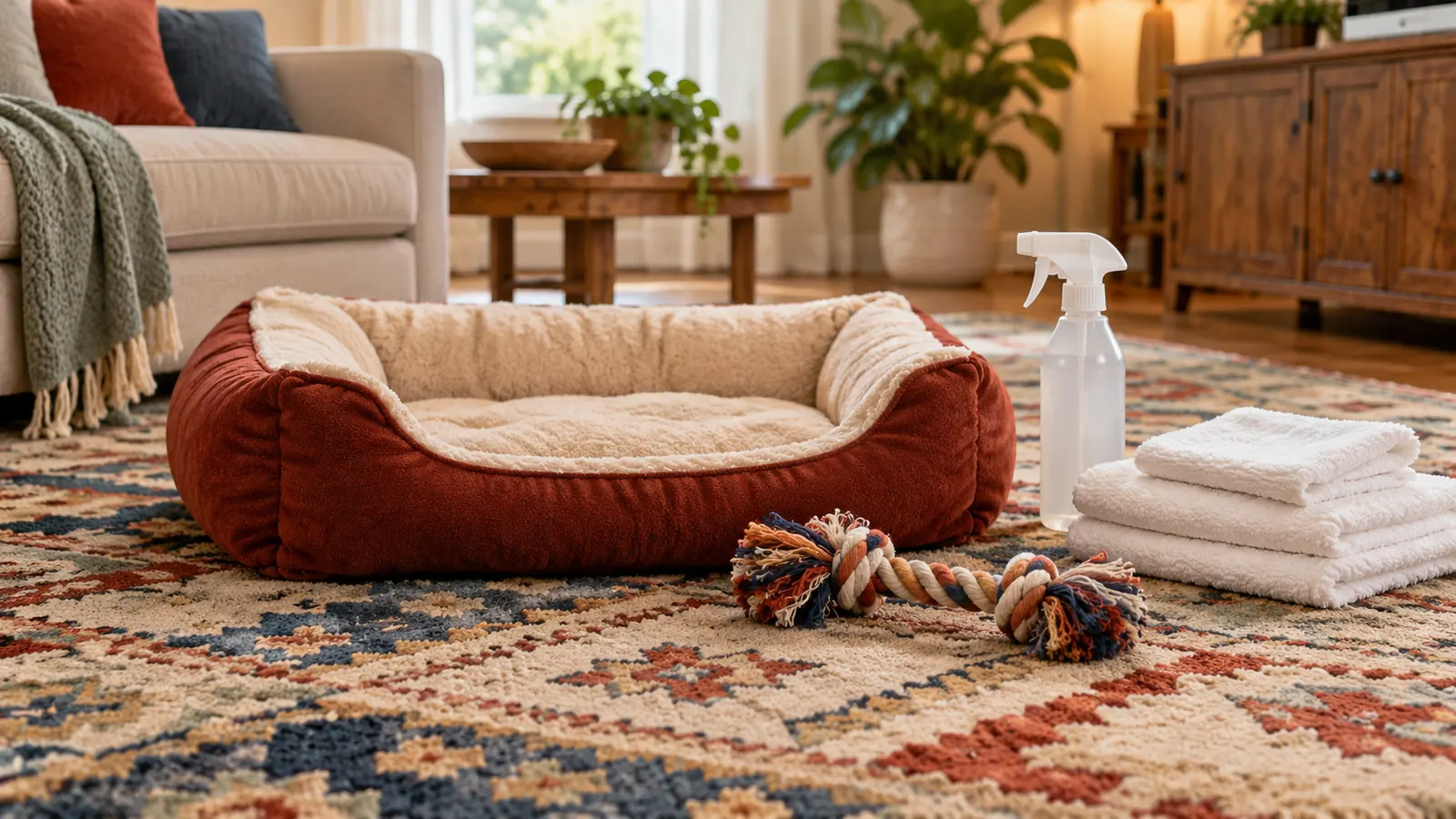
Act fast
Ohio State’s first rule is to clean the area thoroughly as soon as possible. The longer urine sits, the deeper it goes.
The step-by-step method
- Blot up as much as you can with paper towels as soon as you find it.
- Cover the spot with a towel or a pile of paper towels and stand on them; repeat several times.
- Saturate the area with a carpet cleaner or a few drops of dish detergent mixed with water and let it sit for an hour or two. Do not scrub.
- Rinse by gently blotting, then rinse again with a sponge wet with tap water.
- Soak the area with club soda for ten minutes, then blot it up.
- Cover with fresh towels, weigh them down with books or furniture and leave overnight.
- In the morning, spray the area with an enzymatic cleaner made for pet urine.
The hospital notes that there are many enzymatic cleaners on the market and that you need to follow the directions for the one you choose.
What not to use
Ohio State is emphatic: never use ammonia or ammonia-based products on the carpet. The smell may attract the cat to that area and can encourage it to urinate there again. University of Tennessee Extension adds a safety rule for any cleaning: never mix bleach with ammonia, a combination EPA warns can create toxic vapors.
A spot that keeps attracting your pet is a sign the odor is still there, even if you cannot smell it. Repeat the enzymatic step before trying anything stronger.
When the padding has to go
If the smell is bad and the animal keeps using the area despite all the cleaning, Ohio State advises replacing the padding underneath and cleaning the area under the carpet. A surface cleaning cannot reach urine that has soaked into the pad and subfloor. This is also why a professional cleaner should be asked whether it treats the pad; see Questions to Ask a Carpet Cleaner Before You Book, and the Answers to Listen For.
Area rugs: look underneath
With an area rug, you can do what you cannot with wall-to-wall carpet: lift it. Check the back of the rug, the pad and the floor beneath; urine that soaked through can damage a wood floor. The National Park Service vacuums the back of each rug, its padding and the floor underneath at least once a year, and recommends rug pads made of synthetic padding rather than rubber non-skid pads, jute or horsehair. If the pad under a rug is soaked, replace it rather than trying to clean it.
Hard floors
On hard surfaces, Ohio State’s method is simpler: wipe up the puddle with paper towels or a mop soaked in soapy water, clean thoroughly and rinse with warm water.
Pets, carpets and allergies
Carpet holds more than accidents. EPA explains that proteins in a pet’s skin flakes, urine, feces, saliva and hair can trigger asthma, and that dogs, cats, rodents and other warm-blooded mammals can trigger it in people allergic to animal dander. EPA says the most effective control is to keep animals out of the home; short of that, it lists measures such as keeping pets out of bedrooms and away from upholstered furniture, carpets and stuffed toys. If a pet leaves the home, EPA advises thoroughly cleaning floors, walls, carpets and upholstered furniture.
Cleaning routines for allergic households
EPA’s asthma guidance suggests vacuuming carpets and furniture every week with a vacuum that has a HEPA filter, and doing it when the person with asthma is not around. Other isolation measures EPA lists include keeping the pet outdoors as much as possible. For more on allergies and carpet, see Carpet and Allergies: Dust Mites, Pet Dander, Mold and How Cleaning Helps.
Moths and soiled spots
On wool rugs there is one more reason to clean accidents fully. University of Tennessee Extension notes that clothes moth larvae are especially damaging to fabric stained with urine and beverages. A urine spot left in a wool rug can become a moth hole; see Caring for Wool and Oriental Rugs: Vacuuming, Moths, Pads and Storage.
Prevention
Accidents in the same spot often have a cause, from a litter box a cat dislikes to a medical problem. If repeat accidents continue after thorough cleaning, talk to your veterinarian. For general stain technique, see Carpet Stain Removal: A Careful Method and Safer Products.