
Care tag
- The National Park Service vacuums the back of rugs, the padding and the floor beneath at least once a year.
- Clothes moth larvae do most damage to carpets left undisturbed, such as under heavy furniture.
- Every home has dust mites, which live in carpets as well as bedding, EPA says.
There is no single number of days between carpet cleanings that suits every home. A hallway runner in a house with two dogs needs more attention than a rug in a guest room. What does suit every home is a routine: frequent vacuuming done the right way, quick action on spills, and a few checks once a year.
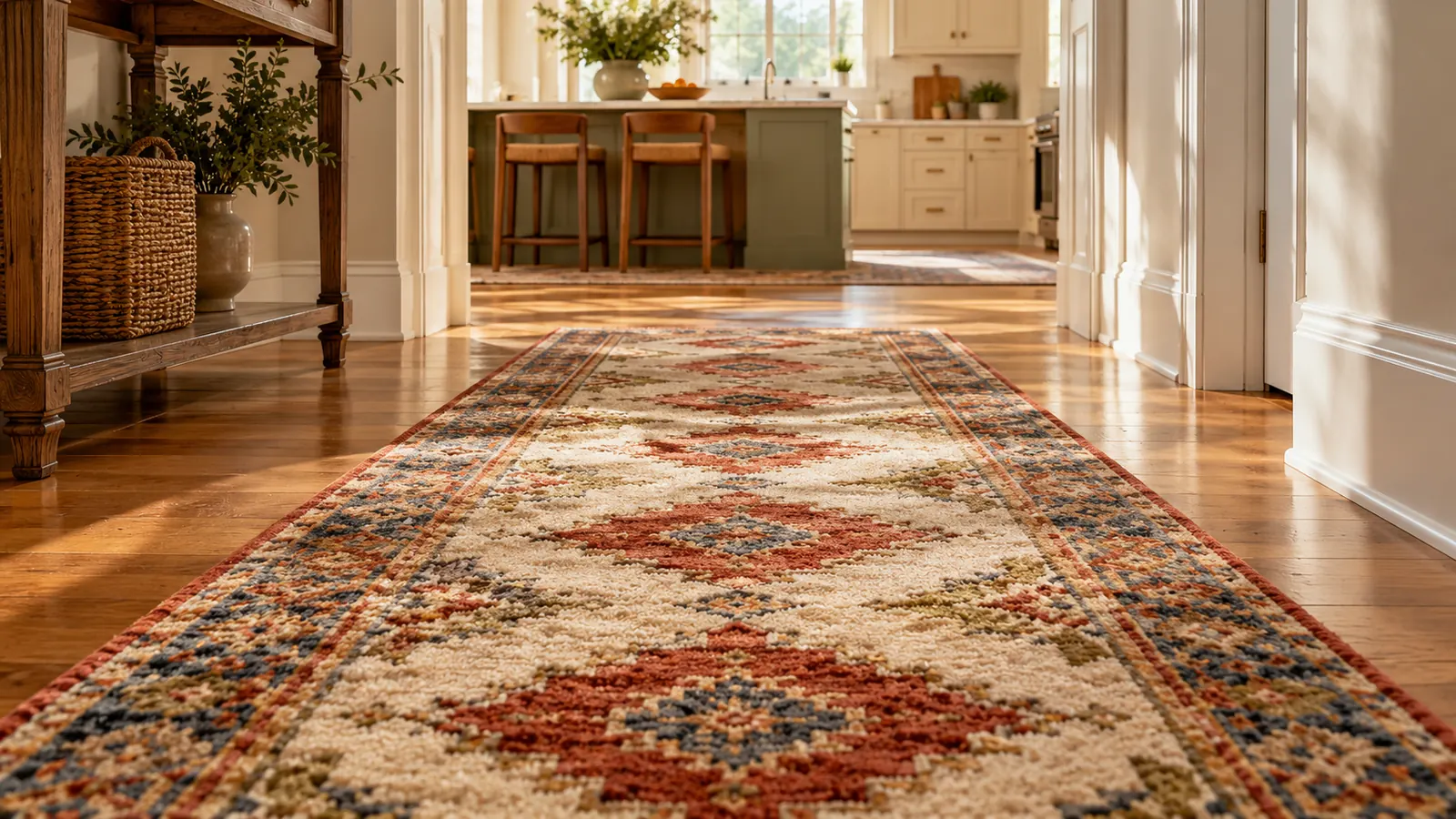
Why regular care matters
Dirt is more than a looks problem. The U.S. Environmental Protection Agency notes that every home has dust mites, tiny creatures that feed on skin flakes and live in mattresses, pillows, carpets and upholstered furniture, and whose body parts and droppings can trigger asthma in people allergic to them. Pet dander collects in carpet too. For wool rugs, there is another reason: University of Tennessee Extension explains that clothes moth larvae prefer soiled material and are especially damaging to fabric stained with beverages, urine and hair oils.
Vacuum the right way
The National Park Service’s care rules for historic carpets are written for museum pieces, but the principles help any rug last longer:
- Do not use a beater-bar attachment on delicate or antique rugs; control the suction instead.
- Vacuum in the direction of the pile.
- Use a proper rug pad, and avoid rubber non-skid pads, jute and horsehair under valuable rugs.
- Put small cups or discs under furniture legs that rest on a rug.
- Watch for signs of carpet beetles and moths, and act quickly if you suspect them.
For wall-to-wall carpet in daily use, a regular upright vacuum is fine. EPA’s asthma guidance suggests vacuuming carpets and furniture every week, using a vacuum with a HEPA filter, and having people with asthma or allergies leave the area while it is done.
A routine by frequency
- Right away — Blot spills and pet accidents; see the stain and pet guides.
- Weekly, more in busy rooms — Vacuum traffic lanes, entries and areas near pets.
- Every few weeks — Vacuum under and behind furniture and along baseboards.
- Seasonally — Rotate area rugs so wear and sun fading even out.
- At least once a year — Vacuum the back of rugs, the padding and the floor beneath.
- As needed — Deep clean, or call a professional, when soil no longer vacuums out.
The yearly step comes straight from the National Park Service, which vacuums the back of each rug, the padding and the floor underneath at least once a year. It is also when you will find moth damage, which UT Extension says is greatest in articles left undisturbed for a long time, such as carpets under heavy furniture.
Why the corners matter
UT Extension says good housekeeping is critical in preventing clothes moth damage, and recommends regular use of a strong vacuum with proper attachments to remove lint, hair and dust from floor cracks, baseboards and carpets, including where rugs fit close to the baseboards. Moth larvae prefer secluded, dark places such as carpet corners and edges and furniture that is seldom moved. A female webbing clothes moth lays 40 to 50 eggs that hatch in 4 to 21 days, and the full life cycle takes about 65 to 90 days, so a missed corner can host more than one generation in a year.
When to deep clean
Deep cleaning makes sense when vacuuming no longer lifts the soil, when traffic lanes look gray, or before and after a change such as a new pet or a move. In a household with allergies, more frequent cleaning may help; see Carpet and Allergies: Dust Mites, Pet Dander, Mold and How Cleaning Helps. Whether to do it yourself or hire someone is covered in DIY Carpet Cleaning or a Professional? How to Decide for Each Room and Rug.
Keep a doormat inside and outside each entry. Soil that never reaches the carpet is soil you never have to clean out.
Keep it dry
Whatever the routine, moisture undoes it. EPA recommends keeping indoor humidity below 60 percent, ideally between 30 and 50 percent, and drying anything wet within 24 to 48 hours. Middle Tennessee summers make that a real job; see Nashville Humidity and Carpet Care: Keeping Rugs Dry Through Rainy Springs and Muggy Summers.
Rugs in storage
Rugs rolled up and put away still need care. The National Park Service rolls large flat textiles such as rugs around a tube rather than folding them, and UT Extension notes that moth damage is greatest on articles left undisturbed. UT Extension advises cleaning textiles before storage because egg-laying moths are attracted to soiled articles. Clean a rug before storing it and check it at least once a season. Details are in Caring for Wool and Oriental Rugs: Vacuuming, Moths, Pads and Storage.
Small habits, long life
Taking shoes off at the door, blotting spills immediately and moving furniture now and then so no area stays undisturbed for years are small habits. UT Extension notes that frequent use of woolen articles almost assures no damage from clothes moth larvae, and the same logic applies to rugs that are walked on and vacuumed.