
Care tag
- If wet materials are dried within 24 to 48 hours, in most cases mold will not grow, EPA says.
- Mold can hide on the underside of carpets and pads.
- For mold covering more than about 10 square feet, EPA points to its professional remediation guidance.
Not every water problem is a flood. A dishwasher leak, an overflowing toilet, a burst supply line or a window left open in a storm can soak a carpet just as thoroughly in one room. The clock starts the moment the carpet gets wet.
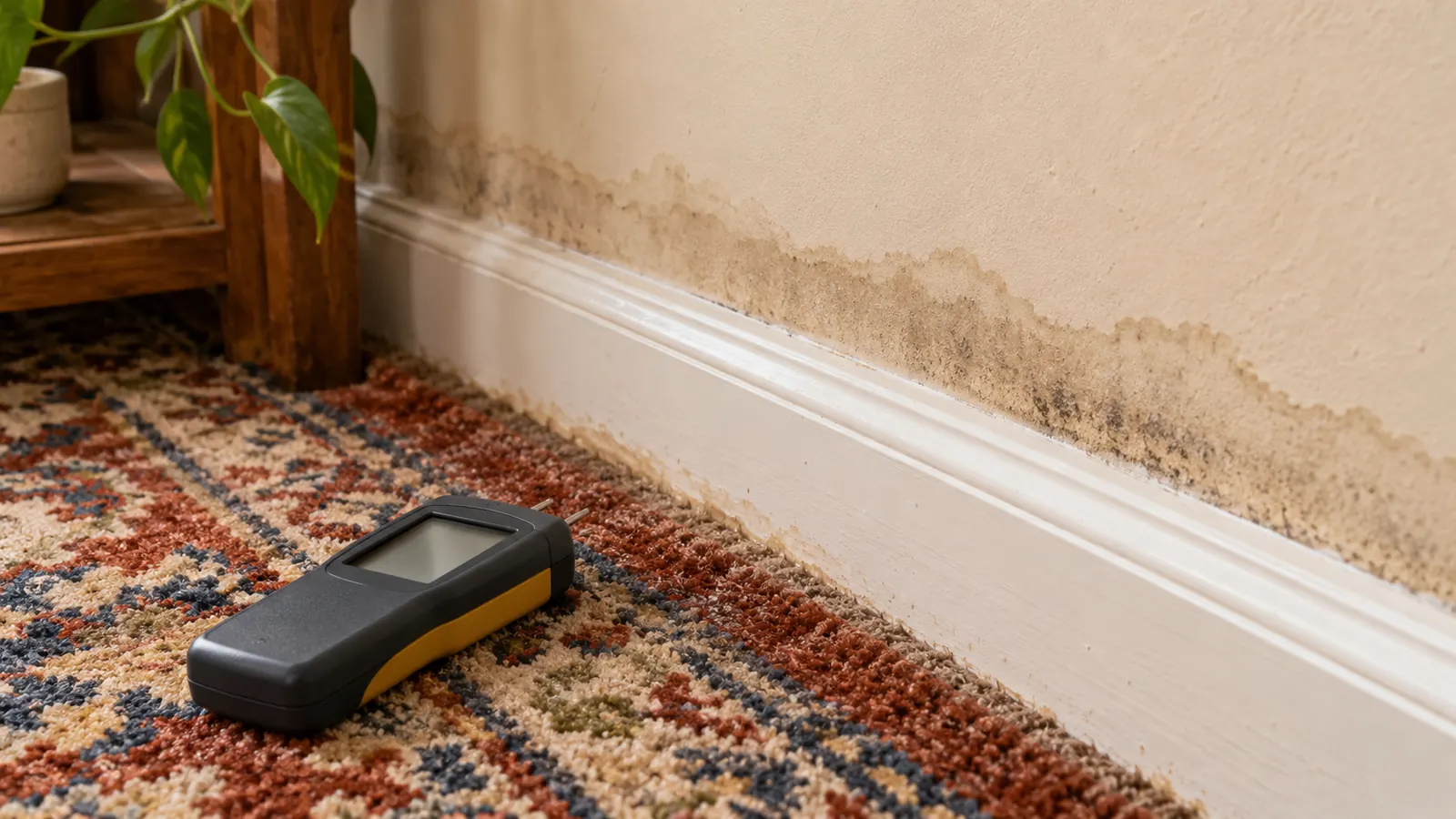
The 24-to-48-hour rule
The U.S. Environmental Protection Agency’s mold guide says that if wet or damp materials or areas are dried 24 to 48 hours after a leak or spill happens, in most cases mold will not grow. Molds are usually not a problem indoors unless spores land on a wet or damp spot and begin growing, EPA explains, so drying fast is the single most important step.
Key takeaways
- Stop the source of water first.
- Extract water and dry carpet and pad within 24 to 48 hours.
- If the water was dirty, or the carpet stays wet longer, plan to replace it.
Step by step
- Stop the leak and, if needed, turn off power to wet areas.
- Remove standing water with a wet vacuum, as EPA recommends for floors and carpets.
- Lift furniture off the wet carpet and put foil or blocks under legs.
- Pull back the carpet at a corner to check whether the pad is soaked.
- Run air conditioning, dehumidifiers and fans, and open windows when outdoor air is dry.
- Check again after a day; the carpet surface can feel dry while the pad stays wet.
Clean water or dirty water?
The source matters. EPA’s flood guidance notes that floodwater can mix with sewage, dirt and other substances and bring bacteria and chemicals into the home, and that materials that soak up a lot of water, such as carpets, should usually be thrown away after a flood. A clean supply line leak caught quickly is a different situation from a backed-up sewer or rising water from outside; the second is a removal decision. See Carpet After a Flood in Nashville: What to Save, What to Throw Away and How to Stay Safe.
Hidden mold
EPA lists the underside of carpets and pads among places mold may hide, along with the back of drywall, wallpaper and paneling and walls behind furniture where condensation forms. You may suspect hidden mold if a room smells moldy but you cannot see the source, or if you know there has been water damage. EPA cautions that investigating can release spores, so take care when lifting materials.
When carpet has to go
Absorbent or porous materials such as ceiling tiles and carpet may have to be thrown away if they become moldy, EPA says, because mold can grow on or fill the empty spaces and crevices of porous materials and may be difficult or impossible to remove completely. If the moldy area is less than about 10 square feet, roughly a 3-by-3-foot patch, EPA says in most cases you can handle the job yourself. If there has been a lot of water damage or mold covers more than 10 square feet, EPA points to its guide for professional mold remediation.
If the item is expensive or has sentimental value, such as an heirloom rug, EPA suggests consulting a specialist in carpet and rug cleaning or water damage restoration before deciding.
Protect yourself
For mold and flood cleanup, EPA advises at a minimum an N-95 respirator, goggles without ventilation holes and protective gloves. If you use disinfectants or biocides, always ventilate the area and exhaust the air outdoors, and never mix bleach with ammonia.
Check the air system too
Water that reached ducts or the heating and cooling equipment needs separate attention. If you suspect the system is part of the moisture problem, or there is mold near its intake, EPA suggests consulting its guide on whether to have your air ducts cleaned before running it.
Choosing gloves and a mask
EPA’s mold guide adds detail that helps when you shop for supplies. With water and a mild detergent, ordinary household rubber gloves are fine; with a disinfectant, chlorine bleach or a strong cleaning solution, choose gloves of natural rubber, neoprene, nitrile, polyurethane or PVC, ideally long enough to reach the middle of the forearm. N-95 respirators are sold at many hardware stores. EPA notes that dead mold can still cause allergic reactions, so moldy material has to be removed, not just sprayed.
Stop it from happening again
EPA’s prevention list is short and practical: fix leaky plumbing and the building envelope as soon as possible, keep air conditioning drip pans clean and drain lines flowing, vent moisture-producing appliances such as clothes dryers outdoors, and keep indoor humidity below 60 percent, ideally between 30 and 50 percent. EPA notes that condensation can be a sign of high humidity. Summer humidity in Middle Tennessee makes these habits especially important; see Nashville Humidity and Carpet Care: Keeping Rugs Dry Through Rainy Springs and Muggy Summers.